When Marnie Was There: The Ghibli Movie That Broke Me
I found a lot of myself in Anna, the movie's protagonist, but resonated with the ending more than anticipated.

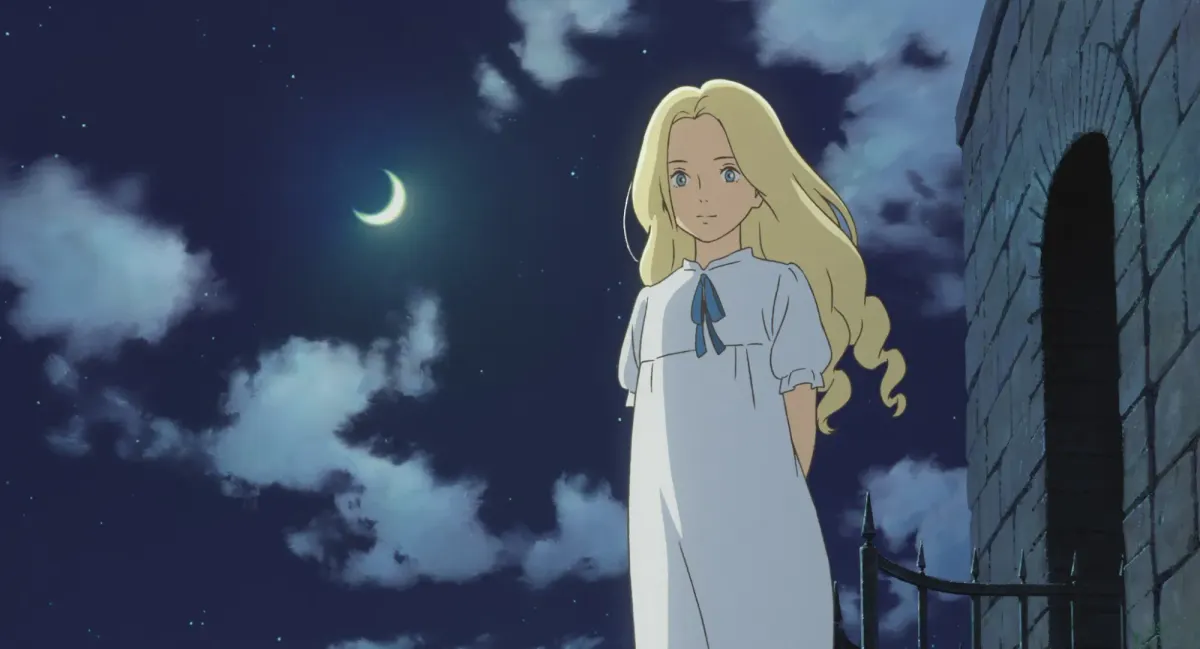
There's a moment near the end of When Marnie Was There where Anna learns that Marnie, the girl she's been spending the whole summer with, was her grandmother. When that reveal hit, I wasn't thinking about Anna anymore. I was thinking about my own grandmother, who died in August 2017 at the age of 105, and about a question I still can't answer: did I actually spend enough time with her?
Watch the video version of this essay on my YouTube channel:
Video: Oren Cohen's YouTube channel.
I didn't cry about Marnie. I cried about my grandmother.
My grandmother lived alone in Tel Aviv. She had a caretaker (I'll call her Lina) who stayed with her all week, and for a while, the weekends too. But caring for someone that old is hard work, and Lina needed her weekends back.
So my cousin and I started staying with our grandmother once or twice a month. We split the job the way that made sense: I was there to do kiddush, and my cousin helped her bathe. It went on like that for about a year or two, until she passed away.
She was my last grandparent. I lost the others years earlier: my grandfathers when I was young, my maternal grandmother when I was 17. So when she died, the grief came with something heavier underneath it: the feeling that I could have done more. That those weekends, as real as they were, weren't enough. That I didn't build the memories I should have built while I still could.
I've carried that feeling for years without naming it. Then a quiet little Ghibli movie named it for me.
Anna is the quiet one. So was I.
Anna, the girl at the center of the movie, is sent away from the city to a countryside village for the summer because she's struggling. With her health, but mostly with herself. She's the quiet one. The weird one. The one who has trouble making friends. I recognized her immediately, because that was me.
Anna is a foster child, and at some point she discovered that her foster mother receives money from the government to care for her. From Anna's vantage point, that poisons everything. She can't see that her foster mother genuinely loves her. She only sees the payment, and decides she's a burden nobody actually wants.
Then Marnie appears. A quirky girl living in an old mansion across the marsh, who wants to be Anna's friend. Not politely. Fiercely, from day one. For a lonely kid, that's everything. The whole movie is Anna slowly learning that she is loved and wanted, that the story she's been telling herself about being unwanted was never true.
And then comes the reveal: Marnie was her grandmother. The one real connection Anna was missing her whole life had been reaching for her the entire time. That's the moment that hit me right in the gut. Anna got a summer with her grandmother that she didn't know she had. I had weekends with mine, and I still wonder if I used them well.
There's no magic in this movie, and that's why it works.
Most Ghibli films pull you into another world. Spirited Away has its bathhouse of spirits. Howl's Moving Castle has its wizards and walking castle. They're magical adventures, and that's what we expect from the studio.
When Marnie Was There has none of that. No spells, no second world. It's implied that Marnie is a ghost, or a memory, or something in between, but we never actually see magic. And yet the movie still feels magical, because it does what those other films do with sorcery using nothing but grief, loneliness, and a summer in the countryside.
That's also why I think this movie is criminally underrated. It doesn't get talked about the way Spirited Away or Totoro do, maybe because it's the quiet one. The weird one. The one that has trouble making friends. Sounds familiar.
What I'm left with
I don't think When Marnie Was There fixed anything in me. The question of whether I spent enough time with her is still there, and I suspect it always will be. But the movie did something rarer than fixing it: it saw it. It put my exact ache on screen and told me I'm not the only one carrying it.
If you've lost someone and you're still doing the math on the time you had together, watch this movie. It won't give you the answer. But it will sit with you in the question, and sometimes that's what healing actually looks like.


