There's Always Another Secret: What Mistborn Teaches About Heroic Death
A reread of Mistborn: The Final Empire to celebrate 20 years of the series.

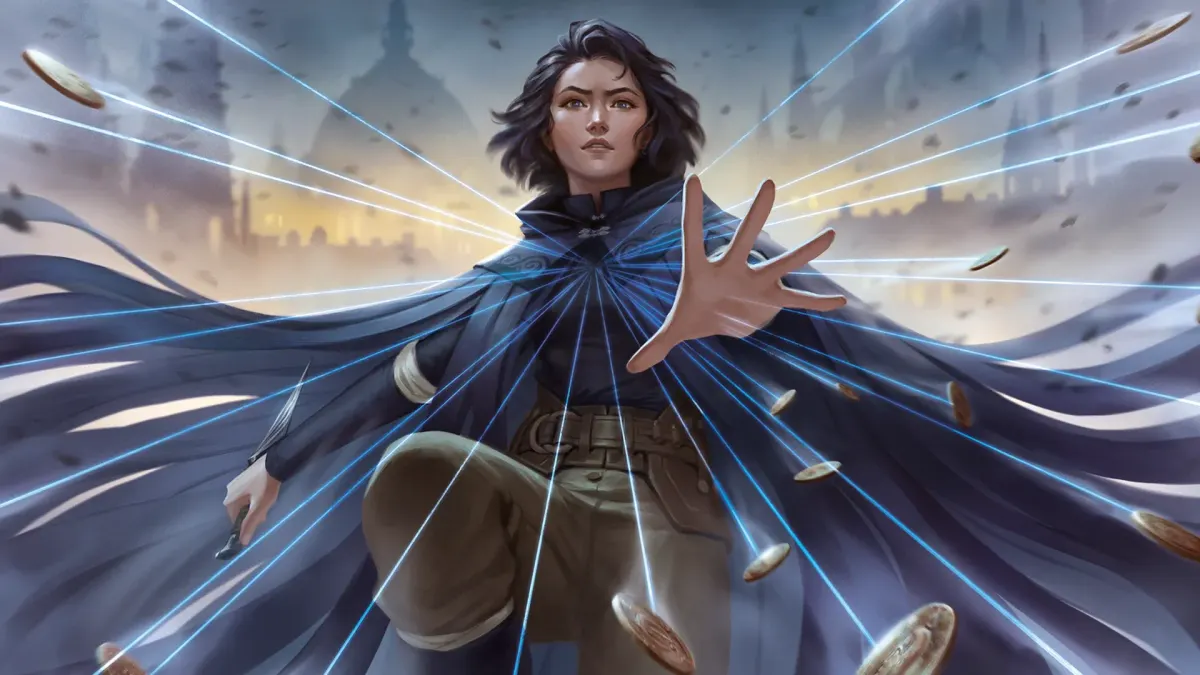
Have you ever read a book that made you love a hero much more after their death? Mistborn: The Final Empire does exactly that with Kelsier. He dies right before the end and we realize the heist's true purpose was to give the skaa a martyr all along.
Mistborn has just turned twenty. So, in celebration of the series, let's explore Kelsier's journey and why Vin was never the hero of this story - only the protagonist.
Scadrial is a Miserable Planet
Every time a scene is described, there's ash and soot. Sanderson really makes an effort to make us believe Scadrial is not doing well as a planet. The skaa are slaves in all but name, and the nobility is so detached from everyone else that just existing in this world takes a lot of effort. Plants as we know them no longer exist in this world either. Mare, Kelsier's late wife, had a flower painting which tells us plants were green and now they're not. This world is not for the faint of heart.
You either serve your betters or you oppress your lessers, there's no in-between.
And then we get introduced to Kelsier who is definitely insane.
Kelsier Was Committed to Dying From The Start
I do believe Kelsier was ready to give up everything through most of the book. I don't know if he actually planned to die even before page one, but he was definitely there for a very long time.
It makes sense he would live as he did if all he planned to do was die as a martyr. When you do that you don't really plan for riches or family. In the same way Vin infiltrated the balls and met Elend, Kelsier could have met his next wife too.
He devoted his time to other pursuits.
One of my favorite moments from the book is when Vin comes back in only her shift after having been rejected by Elend and then attacked by Shan Elariel. She explodes at the crew when Kelsier reprimands her for saving Elend - a nobleman. Some time later they talk on the roof and she tells him, "when are you going to leave me too?"
And he sorrowfully says he doesn't know. But he does know and that sorrow is something deeper than sympathy. It's more gut wrenching to reread that conversation because of that.
"When are you going to go? When are you going to leave me?"
Kelsier looked sorrowful. "I... Vin, I don't know. This job, the plan...." - Vin and Kelsier, chapter 31.
To Build a Crew is to Build a Family
We begin this story with how detached Vin is from all the other allomancers in Kelsier's group. Kelsier himself is described as imposing and somewhat scary.
Yet as the book progresses, we not only see Vin grow attached to each of them as she considers them her friends, Kelsier makes the effort to let her study with each of them. Kelsier is a Mistborn so he has access to all the metals. Yet the other members of the group like Breeze, Clubs, Ham and even Marsh are Mistings who have perfected their powers. She learns a lot from them.
In a way they become Vin's family. And Kelsier's.
Those relationships and the trust he put in these people is what let him do what he did next.
Kelsier Never Thought He'd Kill The Lord Ruler
It's so obvious now, looking back, that the few times where the group went to the square when there were executions, Kelsier was all about keeping morale.
He knew he didn't stand a chance against the Lord Ruler. Given what we know about how Vin defeated the Lord Ruler, it's safe to say nobody had a chance. What Vin did was an unexplained feat that is raised as an open question. One which is answered in the sequels.
So knowing he didn't have a chance, Kelsier did all he could to break the barrier of fear in his life so that when the time finally came and he gave his life, these people he called friends would answer the call and continue what he started.
Part of all that effort was making sure Vin became the Mistborn she was always meant to be.
Vin's Growth Was Fueled By Two Sacrifices
Through most of the book, Reen's voice whispers in Vin's ear. Always making her doubt herself, distance herself from people, and essentially sabotage everything good in her life.
Kelsier, on the other hand, showed her kindness. Brought her into a shelter where she could be herself and no longer fear what the next hour will bring.
Both of those people sacrificed themselves. Reen, as we discover from Kar, did not give up Vin through Inquisitor torture, and Kelsier in the fight against the Lord Ruler. In a way, both of them died so Vin may live and grow. Kelsier released the skaa, and Reen freed Vin.
Those sacrifices help her grow into the person who does not shy away from Elend Venture and returns to receive his affections at the end of book one. They also help her grow into the person who will make moves. Not just do as she's told. For most of this book, it's Kelsier who sets the tone and the plot. He gives the directions and Vin just follows orders, or follows in his footsteps.
Kelsier not only passed along to her the Eleventh Metal, he also gave her the mantle of heroism. She still doesn't know it, but defeating the Lord Ruler has made others see her as a hero. Her job will be to own it. This is why she was never the hero of this book, only the protagonist. So we end this book with Vin not feeling like the hero but perceived as one. She's still not comfortable giving up on her survival instincts, but chooses Elend anyway. That open ended growth is how Sanderson sells us on the sequel.
Sanderson Seeded The Sequel Naturally Into The Plot
If there's one thing Sanderson does best, it's weave a plot through multiple books. He does that here too. Kelsier dies at the end of the book. The aftermath of dealing with that and getting rid of the Lord Ruler is the payoff we've been waiting for. But what happens next? Luthadel, and the Central Dominance for that matter, is without leadership and it seems Elend Venture is trying to fill that void. Will he succeed? Fail? We don't know. What about Vin and their relationship? What about the skaa? Do they get the better life Kelsier wanted for them?
All of this and more are threads that Sanderson weaves through this book in a manner he did not do for books like Warbreaker or Elantris. Those were standalone books (at least as of writing these words). It's a lesson that future aspiring authors (like myself) can learn about the craft. If you intend to write a trilogy, act like it. Plan for it.
I intend to walk through those plots in the next book in the series, The Well of Ascension. Stick around to discover my reread reaction to that book too.
Thanks for reading!


